Causes of acne
- Hormonal changes such as puberty, menstrual periods, pregnancy and stress can increase the activity of sebaceous glands
- Family history of severe acne
- Certain drugs or medications
- Diet containing whey, dairy, sugars and high glycaemic index foods
- Oil based cosmetic and hair products
- Heavy sweating and humidity
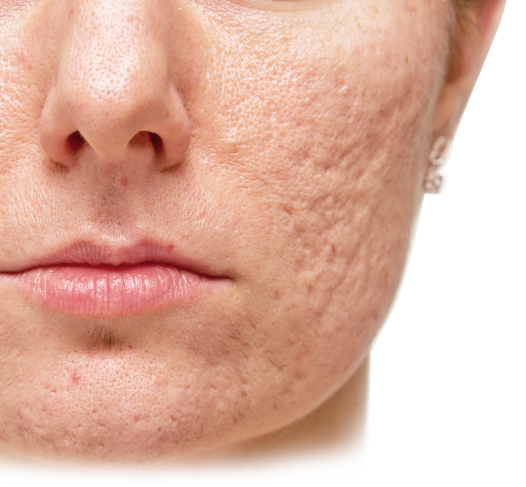
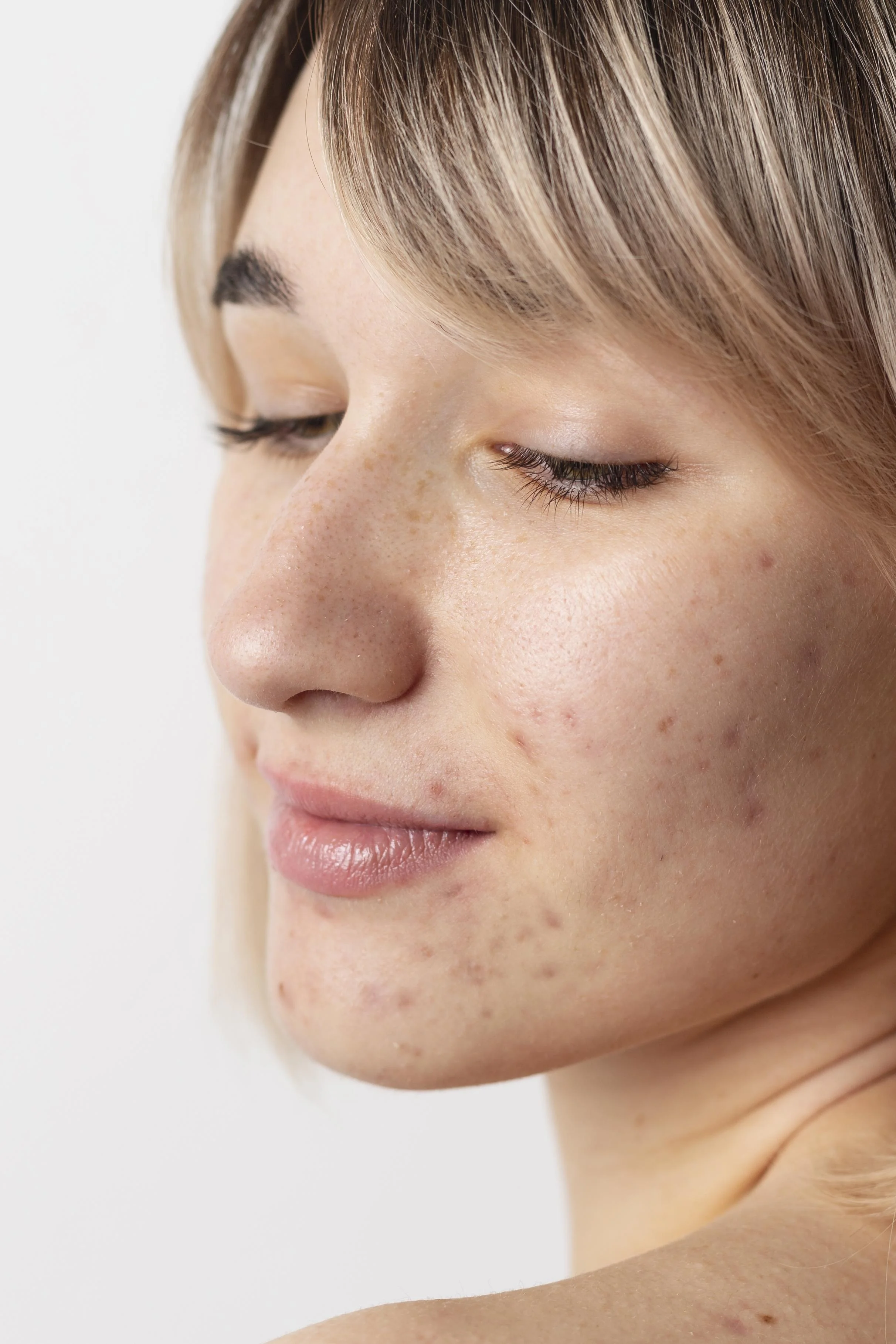
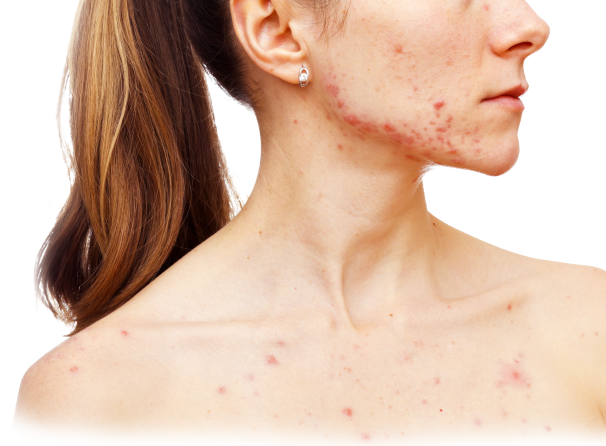
Acne usually appears on the face, but in severe cases, it can also appear on the chest and back. Common features would include nodules and cysts, whiteheads, blackheads, papules, pustules, and scarring of the skin.
An assessment by a trained dermatologist is an important first step before appropriate treatment can be prescribed and tailored to your type of acne. There are other skin conditions that can resemble acne but do not respond to typical acne medications. An experienced dermatologist will carefully assess your skin before recommending any treatment.
Treatment & care for acne
The excellent news is that acne is very treatable, and we now have highly effective treatments for breakouts. Our management strategies follow international guidelines:
- Mild acne - Special anti-inflammatory, anti-comedonal cleansers, prescription-only antibiotic, and anti-inflammatory creams
- Moderate acne - Oral antibiotics, hormonal treatments in combination with prescription-only creams
- Severe acne - Vitamin A derivatives (Oratane) are highly effective for severe acne. They reduce the size of oil glands, oil production, pore-clogging skin cells, and inflammation. In our practice, we use lower doses as it provides excellent results with minimal side effects. Your safety will be ensured with close monitoring by your dermatologist. A typical course of treatment lasts 8–12 months, depending on the severity. The majority of patients achieve excellent clearance of their acne and experience long-term remission of acne symptoms.
- Acne during pregnancy - We recommend pregnancy safe topicals and oral medicines. In addition, facials and peels that are pregnancy and lactation safe are available for extra control.
Your dermatologist will provide a tailored treatment plan to ensure the best possible outcome for your acne.
Lasers for acne
Acne scarring on the face can often be a source of embarrassment and dissatisfaction. Once active acne is controlled, you can embark on a course of laser treatments to improve the appearance of scars. We use top-of-the-range lasers and injectables to effectively target acne scars and marks, including:
- Fractional CO2 Smartxide laser – Treats deeper scars that cause depressions and textural irregularities on the skin
- Picoway laser – Rapidly fades brown marks and treats mild to moderate scars
- Pulsed dye laser (VBEAM) – Rapidly fades pink or red marks and improves texture
- Rejuran injections – Helps repair and restore skin, calming any inflammation and lightening acne marks effectively
- Collagen biostimulators - Juvelook and Sculptra are collagen skin boosters that help to regenerate and restore collagen and volume
- Subcision - Performed to release adhesions or fibrous bands that are causing depressed scars in the skin
By utilising a combination of lasers, injectables and subcision to target different post-acne scar issues, we aim for minimal downtime with maximal effects. Stronger laser treatments may require downtime of around a week, and you will be informed of this beforehand. Usually, a course of repeated treatments at 4-6 weekly intervals is required to resurface the skin and improve the appearance of acne scars.
It is important to avoid tanning before and after your laser treatment to minimise the risk of post-laser pigmentation. Before treatment, your dermatologist will have an honest discussion with you about the predicted outcome, the estimated number of treatments required, and the possible downtime or complications. We are highly focused on delivering good outcomes with the lowest possible risk.