
Sunscreen for anti-ageing and skin protection
Daily sunscreen use is the most important step in any anti-ageing skincare routine.
Use a broad-spectrum sunscreen with SPF 50 or higher every day. UV exposure is a major cause of:
- premature skin ageing
- pigmentation and uneven skin tone
- skin cancer
For different skin types:
- Acne-prone skin: lightweight, gel-based sunscreens
- Outdoor or water activities: thicker, water-resistant sunscreens
Additional protection:
- hats, sunglasses, UV-protective clothing
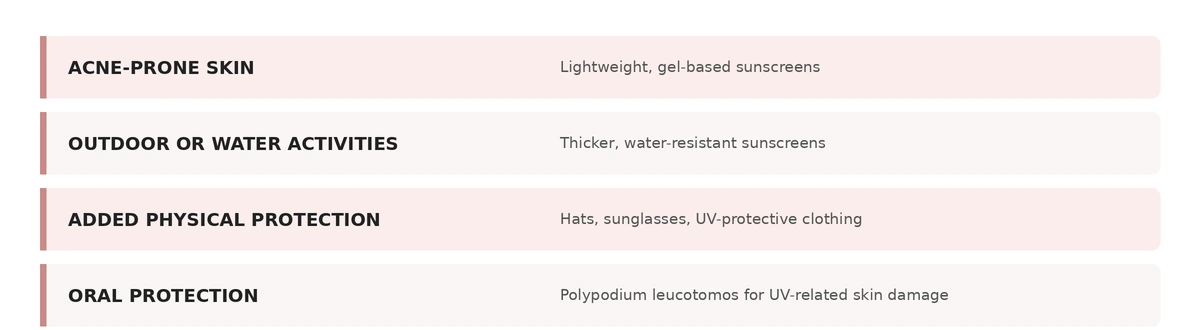
Oral antioxidants such as polypodium leucotomos may provide additional protection against UV-related skin damage.
Hydration and moisturisers for healthy skin
Maintaining hydration is essential for preserving the skin barrier and preventing premature ageing.
Use a moisturiser suitable for your skin type:
- lighter formulations for oily or acne-prone skin
- richer creams for dry or mature skin
To enhance hydration:
- hyaluronic acid and vitamin B5 serums to attract moisture
- ceramide-based moisturisers to repair the skin barrier
Well-hydrated skin appears smoother, plumper, and more radiant.
| Skin type or need | Recommended product |
|---|---|
| Oily or acne-prone skin | Lighter moisturiser formulations |
| Dry or mature skin | Richer creams |
| Attracting moisture | Hyaluronic acid and vitamin B5 serums |
| Repairing the skin barrier | Ceramide-based moisturisers |
Antioxidants for skin protection and brightening
Antioxidants help neutralise free radicals that contribute to:
- skin ageing
- pigmentation
- collagen breakdown
Topical antioxidants include:
- Vitamin C for brightening and collagen support
- tranexamic acid for pigmentation
- hyaluronic acid for hydration support
Oral antioxidants include:
- glutathione
- polypodium leucotomos
These help improve skin tone, brightness, and overall skin health.
Retinoids and alternatives for anti-ageing
Retinoids are one of the most effective treatments for anti-ageing and skin rejuvenation. They work by:
- increasing cell turnover
- improving pigmentation
- reducing fine lines and wrinkles
- unclogging pores
Tretinoin is a widely used / well-evidenced medical-grade retinoid.
For patients who cannot tolerate retinoids:
-
Bakuchiol is a gentler alternative
- improves skin texture and fine lines
- better tolerated in sensitive or rosacea-prone skin
Retinoids and bakuchiol should be used with appropriate moisturisers to reduce irritation.
Skin repair and regeneration
PDRN (polynucleotide) serums play an important role in skin repair and regeneration. They help to:
- support skin healing
- improve skin quality and texture
- enhance hydration
- strengthen the skin barrier
PDRN serums are particularly useful for:
- sensitive or damaged skin
- post-procedure recovery
- ageing skin requiring regeneration
Pigmentation and skin lightening treatments
Pigmentation and uneven skin tone commonly develop with age and sun exposure. Medical-grade treatments include:
- hydroquinone, widely used to treat hyperpigmentation
- cysteamine, an alternative for patients who cannot tolerate hydroquinone
- customised combination creams targeting pigmentation
These treatments help to:
- lighten dark spots
- even out skin tone
- improve overall skin clarity
All pigmentation treatments should be used under medical supervision.
Summary
An effective anti-ageing skincare routine should include:
- daily sunscreen
- hydration and barrier repair
- antioxidants
- retinoids or suitable alternatives such as bakuchiol
- regenerative serums such as PDRN
- targeted pigmentation treatments
Frequently Asked Questions
How long before I see results from a skincare routine?
Skincare works gradually. Hydration and barrier repair often feel better within days, while retinoids, antioxidants and pigmentation treatments generally need consistent daily use over several weeks to months before visible improvement in texture, fine lines and tone. Daily sunscreen protects those results.
What if retinoids irritate my skin?
Retinoids may cause irritation and skin peeling, so the concentration and formulation should be chosen to suit your skin. Using an appropriate moisturiser alongside them reduces irritation. If retinoids cannot be tolerated, bakuchiol is a gentler alternative that is better tolerated in sensitive or rosacea-prone skin.
In what order should I use these products?
A routine typically combines daily sunscreen, a moisturiser suited to your skin type, antioxidants, a retinoid or alternative, and targeted pigmentation or regenerative serums where appropriate. Your dermatologist will set the combination and frequency for your skin so the actives work together rather than causing irritation.
Can I use these treatments after a procedure?
PDRN (polynucleotide) serums are particularly useful for post-procedure recovery, as well as for sensitive or damaged skin, because they support skin healing, enhance hydration and strengthen the skin barrier. Stronger actives may need to be paused around a procedure — follow the advice given at your review.
Do pigmentation creams need supervision?
Yes. All pigmentation treatments, including hydroquinone, cysteamine and customised combination creams, should be used under medical supervision. This allows the strength and duration of use to be monitored and adjusted as your pigmentation improves.